

The city’s churches also contribute to this, serving as landmarks for the locals while boasting significant architectural and cultural value. Quite the opposite, in fact. When visiting Arta and the villages of Tzoumerka, a stop at some of the region’s religious landmarks is an absolute must.

It is also called the "Lady of Arta," a title that reflects its significance to the city and its striking presence. The Church of Panagia Parigoritissa in Arta is a prominent Byzantine monument with unique architectural features and immense historical importance. Built at the end of the 13th century by Nikephoros I Komnenos Doukas, it originally served as the katholikon (main church) of a significant monastery. The large square structure impresses visitors with the ethereal way its dome is supported, seemingly defying gravity. Its mosaics, frescoes, and the unique iconostasis with the miraculous icon of Panagia Parigoritissa add further splendor to a building that is considered the jewel of Arta and one of the most important religious monuments of its time.

Saint Theodora
The most important church in the city of Arta, as it combines great historical significance with the name of the city's patron and protector. Initially dedicated to Saint George in the 11th century, it was later renovated and transformed by Queen Theodora in the 13th century, who subsequently spent the rest of her life within the monastery.
The church features a very distinctive architecture with elaborate decorative elements and an impressive variety. The frescoes were created from the 13th to the 18th century, showcasing a range of artistic styles. The tomb of Saint Theodora, located at the entrance of the church, has undergone multiple restorations due to previous damage, preserving reliefs and slabs dating back to the 13th century. An iconic church for the city of Arta, highlighting the rich religious and spiritual heritage of the city.
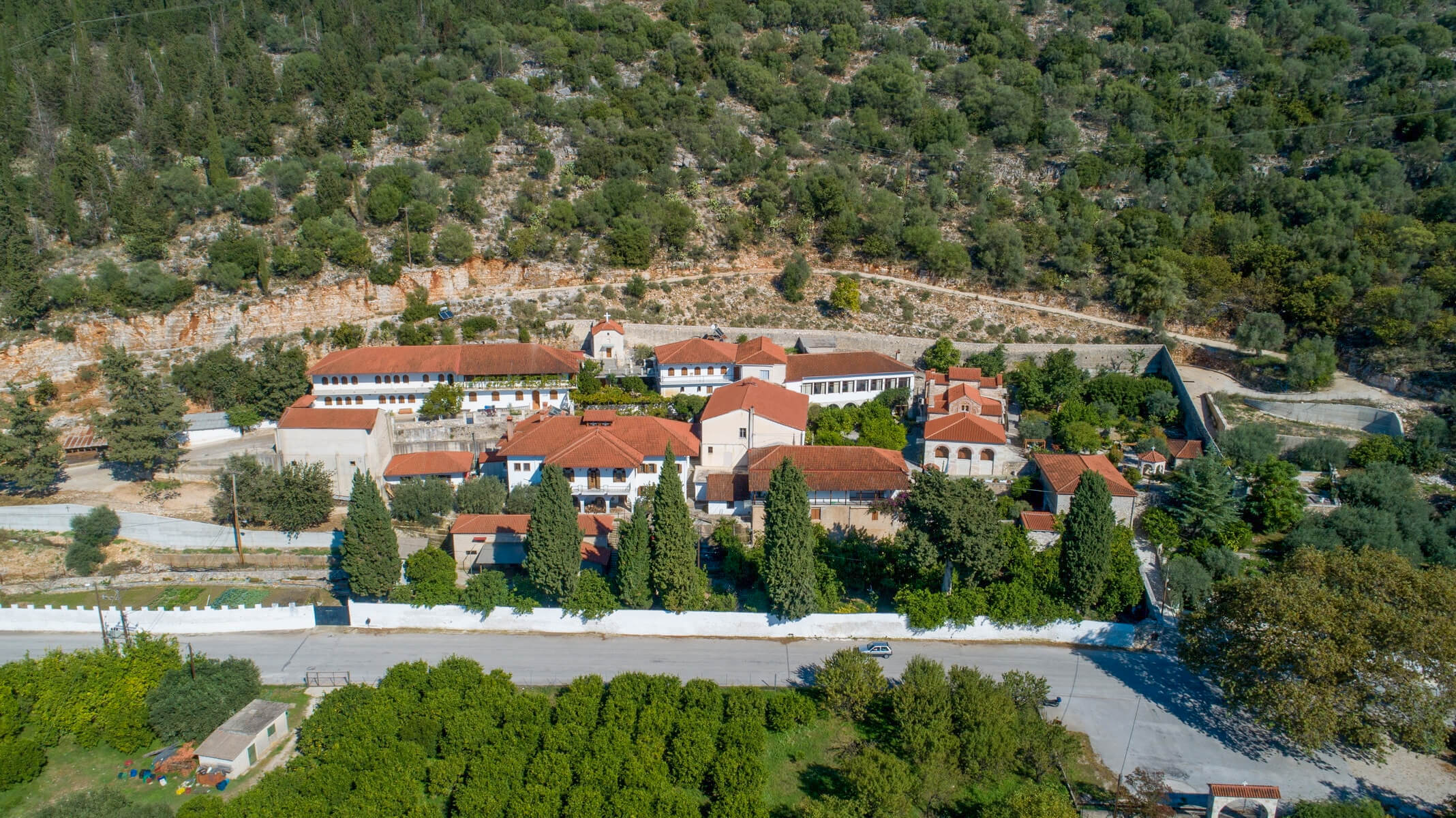
The historic Kato Panagia Monastery, founded around 1250 with funds from Michael II Komnenos, Despot of Epirus, and his wife Saint Theodora, continues to thrive today as a convent. The church, dedicated to the Nativity of the Theotokos, was built between 1250 and 1260 by Michael II Doukas, Despot of Epirus. Despite damage during the Ottoman occupation, recent restoration efforts have preserved parts of the monastery while maintaining its architectural heritage. Numerous wall paintings of exceptional artistic value can be found both inside and outside the church. The monastery has endured turbulent periods, but today it enjoys a period of prosperity, reflected in the idyllic courtyard, known as the “Garden of the Virgin,” offering stunning views over the Arta plain.
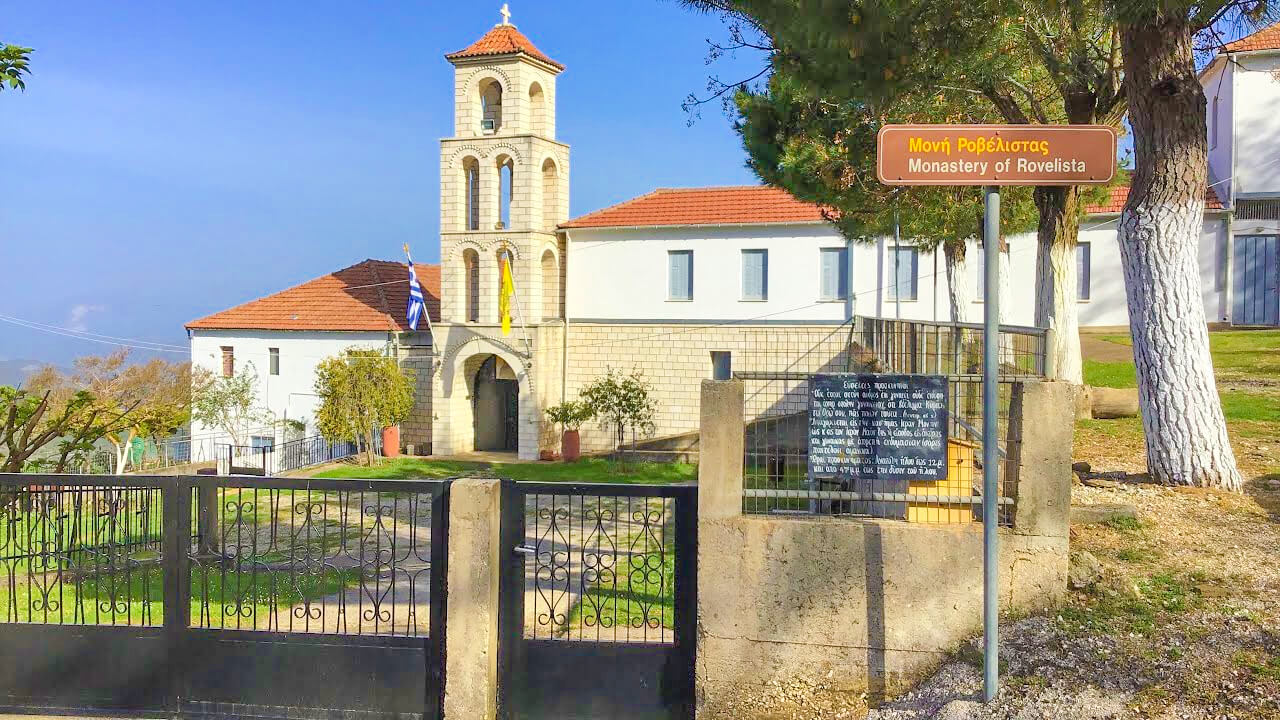
The Monastery of Panagia of Rovelista, located about 30 kilometers east of Arta, nestled in a forested, remote mountainside in the Veletziko area, is an emblematic monastery for the entire mountainous region of Arta. Its history dates back to the 10th century, with the miraculous icon of Panagia Moschovitis within a silver triptych from 1802 serving as its focal point. Over the centuries, the monastery experienced turbulent periods, including destruction by the Turkish army in 1854 and subsequent reconstruction efforts. After years of abandonment, the monastery was revived in 1951, and since 1963 it has been a convent. Its historical significance, combined with the tranquility of its surroundings, offers a captivating experience of the region’s rich cultural and religious heritage.
Located between the Plaka Bridge and the village of Raftanaioi, the Monastery of Panagia Mouchoustiotissa, also known as Plaka Monastery, is a historic religious site. Although its exact founding date remains uncertain, the construction techniques suggest it was built in the latter half of the 1600s, with renovations around 1665. It is a simple single-nave cruciform church with a dome and a stone-tiled roof, adorned with frescoes dating from 1680 and 1694. Inside, a beautiful gilded wooden iconostasis impresses visitors. The monastery’s name comes from the traditional fair (“mouchousti”) that used to take place in the surrounding area. The monastery celebrates its feast on September 8th, when pilgrims gather in the courtyard to enjoy both the religious celebration and the stunning natural scenery of the Tzoumerka mountains.

A very interesting church that stands as undeniable testimony to Byzantine art and architecture. Built around 1280, this church was originally part of a monastery founded by the brothers Ioannis and Theodoros Tsimiskis, earning its nickname due to the reddish hue of its masonry. It closely resembles the Panagia Peribleptos in Ohrid, suggesting it was constructed by the same craftsmen. Although the monastery no longer exists, the church itself has remained largely intact. The interior, however, has not fared as well, with frescoes worn by time and the famous plaster iconostasis replaced by a later wooden one. Its easy accessibility from the Arta side makes it a must-visit for anyone wishing to experience an impressive remnant of the Byzantine era up close.
travel.gr


