

A few steps from the pedestrian street Odos Skoufa, the heart of the city of Arta develops: the Ethnikis Antistasis Square, more widely known as "Nomarchia Square" (Prefecture Square). Here, the paved floor and the trees set the scene for moments of meeting and relaxation.
The cafes and bars that surround it invite every age, winter and summer, to a lively everyday life. In one of its corners, the imposing cathedral of Agios Dimitrios lends a quiet magnificence to the area, while in its middle, the monument to the fallen of the National Resistance recalls the historical dimension of the place.
The square, a point where walks, moments of rest, and collective events intersect, represents the contemporary pulse of Arta against a backdrop of the past.

Nikaolau Skoufa Street in the city of Arta, one of the most vibrant pedestrian streets in the city, constitutes its commercial backbone. The street "is constantly bustling with life, with locals from Arta and visitors alike who are doing their shopping or simply taking a stroll, window shopping."
Between stores, cafes, and small professional spots, Skoufa establishes its role as an everyday destination. The authentic Arta character is shaped through the combination of the old building fabric—such as a two-story building on the street (50-52) which is designated as a modern monument with elements of folk architecture.
In the hands of the city, Skoufa continues to be the hub for walks, shopping, and relaxed moments in the heart of Arta.

Among the narrow streets of the city of Arta, the Church of Panagia Parigoritissa stands out as one of the most impressive monuments of its Byzantine heritage. Built in the 13th century, it served as the main church (*katholikon*) of a large monastery and was fully reformed at the end of the century by Nikephoros I Komnenos Doukas and Anna Palaiologina Kantakouzene.
Its exterior facade "resembles a palace"—with bricks and ceramic motifs that emphasize architectural elegance. Inside, the structure of the temple is astonishing: the dome "floats" on eight pilasters, creating a single, open space that captivates the visitor's eye.
The church is honored during the celebration of the Annunciation of the Theotokos, while it remains a vibrant core of the city—not merely as a historical monument, but as a place of emotion and contemplation.

In the heart of the old city of Arta, the Church of Agia Theodora dominates near the intersection of Vasileos Pyrrou and Agia Theodora streets. Its roots trace back to a women's monastery founded in the 13th century, at the spot where the city's patron saint, Queen Theodora, chose to practice asceticism and be buried.
Its status as a monument is not limited to its architecture: the festive procession that takes place on March 11th through the city streets honors her memory and brings modern life and religious tradition into vibrant contact.
The connection with the past becomes visible through the church—small in size but rich in historical weight—and functions as a bridge between the city of the first eternal heritage and the present.

The Arta Castle was built in the middle of the 13th century A.D. (Anno Domini)—not B.C.—by order of Michael II Komnenos Doukas, Despot of Epirus (1230 – 1271).
Arta was the capital of the Despotate of Epirus for many years, which is why its defensive capability had to be strengthened against every aspiring conqueror.
Its castle is situated in a strategic position, on a low hill, and constitutes a representative example of Byzantine fortification art.
Σήμερα, διατηρείται σε άριστη κατάσταση και είναι επισκέψιμο.

The city of Ambracia—modern-day Arta—felt the need for strong protection, and for this reason, it was surrounded by its imposing fortification wall. Parts of the ancient wall are still preserved, integrated into the modern city.
Its perimeter exceeded 4,500 meters and followed the natural terrain, protecting against both enemy attacks and the floods of the Arachthos river.
Constructed with large limestone blocks at the base and mud bricks above, reinforced at intervals with towers, the wall of ancient Ambracia is a living testament to the city's brilliant history.
The sight of the wall, revealed at various points within the modern urban fabric of Arta, transports the visitor back through the centuries, to where the city forged its identity and security.
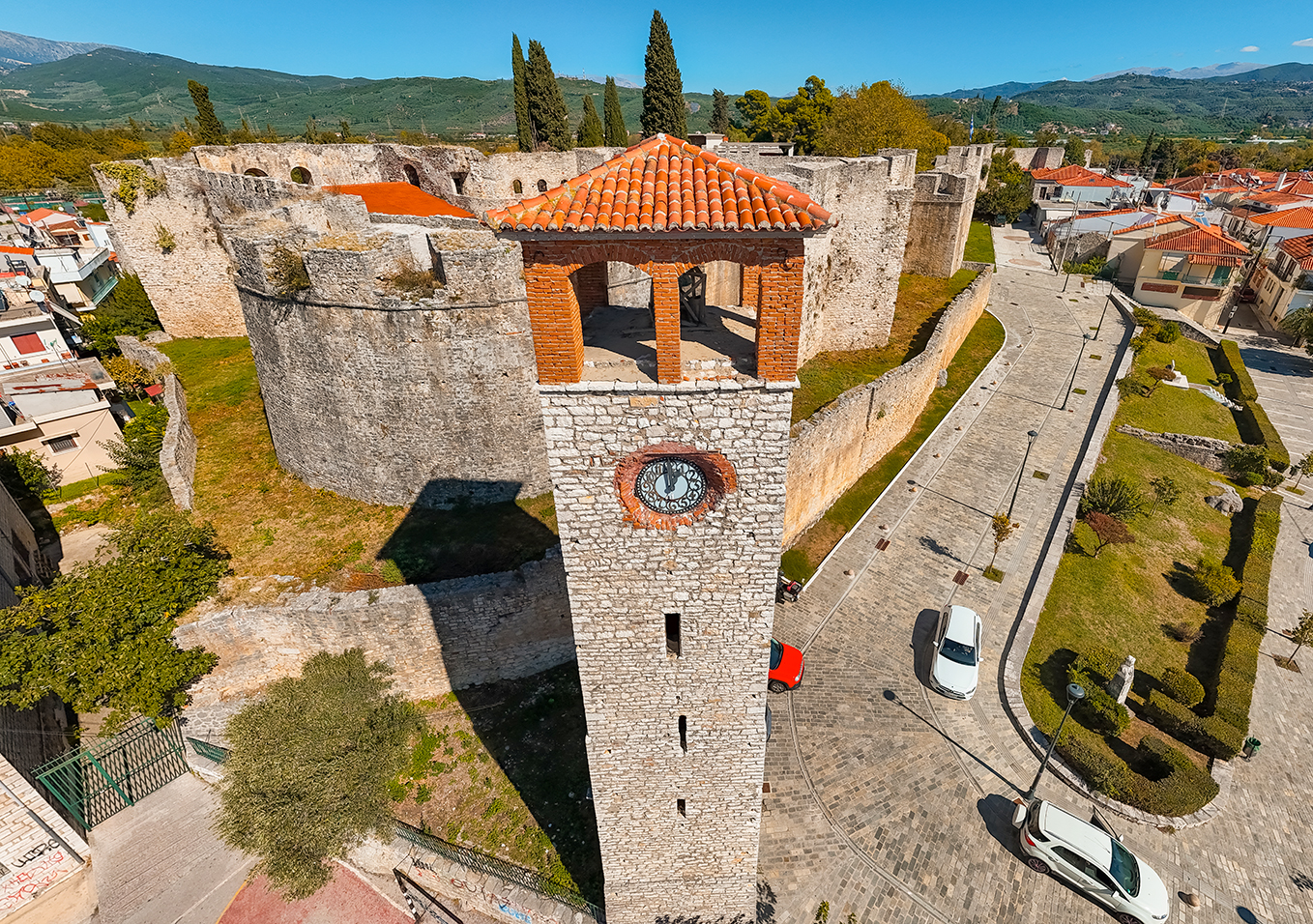
The Clock Tower of Arta is located on the southwest side of the city's castle, has a height of 21 meters, and is made of carved stone.
It is a work of the Ottoman period and constitutes one of the city's most important monuments. The exact date of its construction is unknown, but it is speculated to have been built around 1630. It is the oldest clock in Epirus and one of the oldest in Greece.
There are many references to the clock by writers who visited the city at different time periods. The Turkish chronicler Evliya Çelebi, in his "Book of Travels," mentions that the clock made a full rotation every 24 hours and that the sound of its bell could be heard at a distance of an hour from Arta. He also points out that the technical perfection of the clock was unmatched by any other clock.
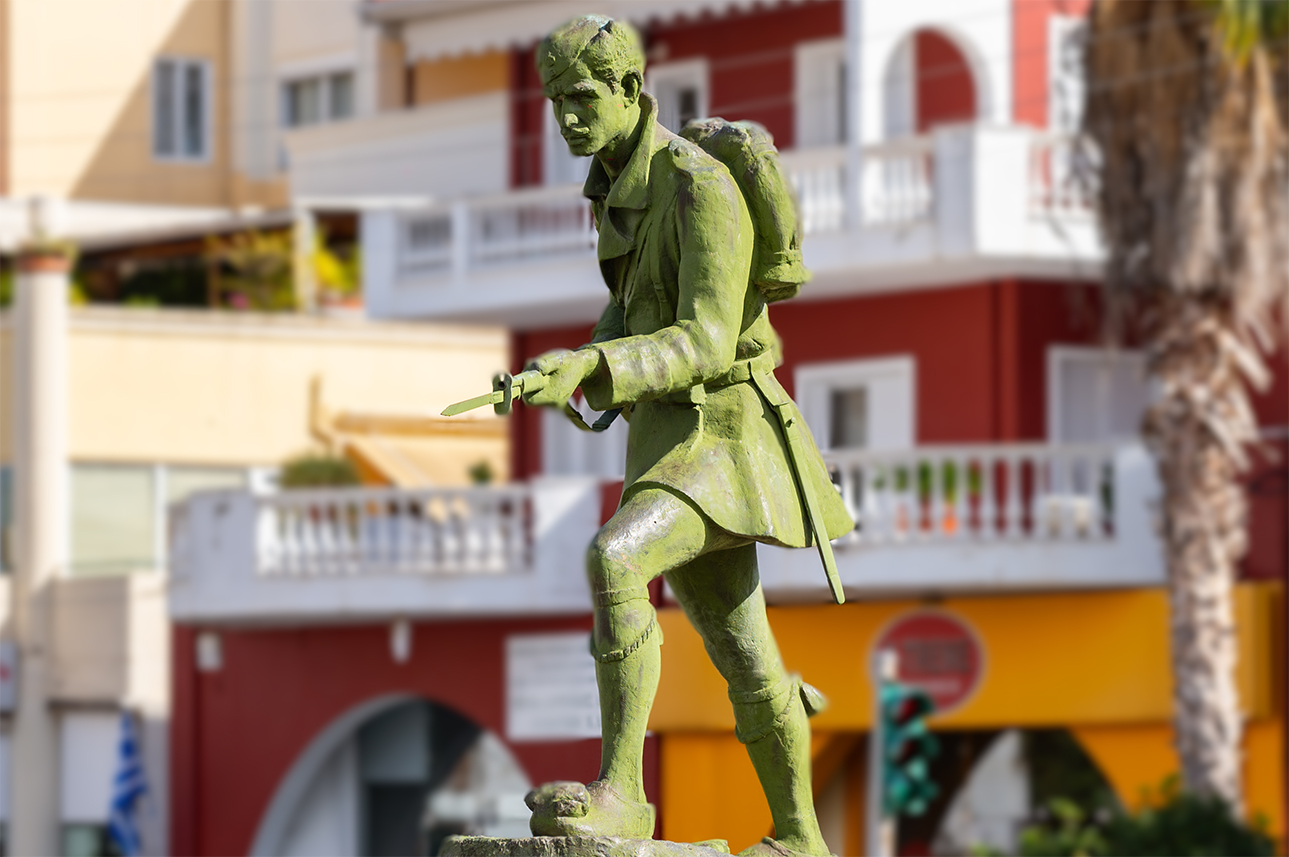
The bronze sculpture, known to the residents of Arta as the "Tsolias of '17" (Evzonas of '17), stands distinctly at the western entrance of the city, on the median strip between the ring road and Al. Zara Street, just a few meters from the famous Bridge of Arta.
A creation by Lefteris Valakas from 1966–68, it depicts a Greek Evzonas at the moment of battle, wearing tsarouchia (clogs), fustanella (kilt), tunic, and a hat with the characteristic tassel—ready to charge with a rifle and bayonet.
The sculptural form combines the traditional folk costume with a dynamic posture, while it is worth noting the inscription on the base: "CASTING 301 E.V., Dec. 1968," which certifies the time of its casting.
Με αυτό το έργο η πόλη της Άρτας τιμά την ελληνική παράδοση και την ιστορική μνήμη της, μέσα από μια μορφή σύμβολο θάρρους και πολιτιστικής ταυτότητας.

Next to the Bridge of Arta, in a beautiful neoclassical building, is housed the "Skoufas" Folklore Museum. The building was constructed in 1864 by an Austrian architect. It was initially used as a guard post for the bridge and later as a Turkish border station.
The museum's purpose is to present the local folk tradition in all its forms. The exhibits include household utensils and handicraft tools, accessories from Carnival disguises, costumes, as well as material (printed and visual) related to the bridge and its legend.
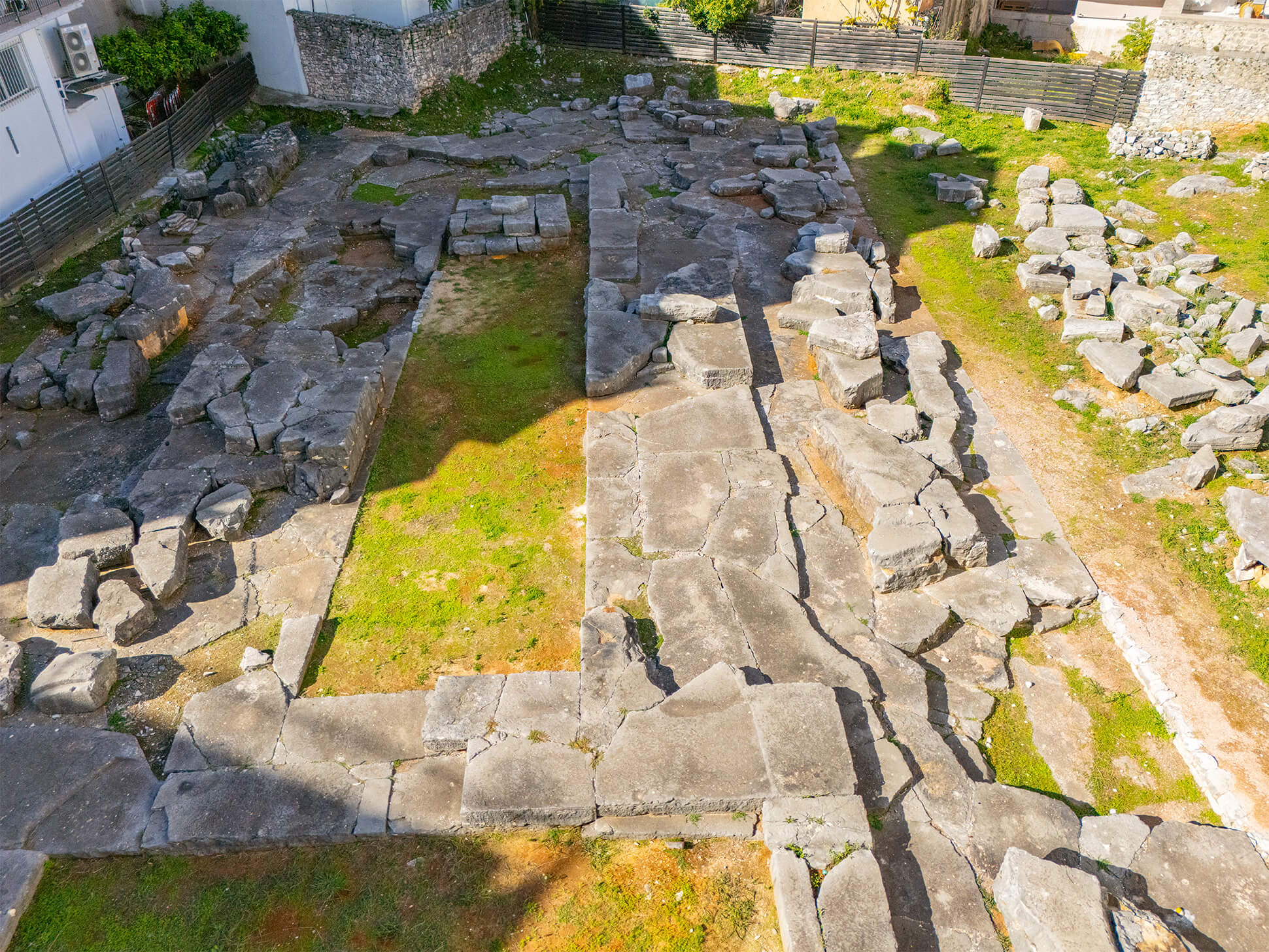
The Temple of Apollo was the largest temple of ancient Ambracia and was dedicated to Apollo Pythios Soteira (Apollo the Pythian Saviour), the protector of the city.
It is located in the center of Arta, on Vasilios Pyrrou Street, and came to light in 1964 during rescue excavations in the city. Based on architectural members found in the surrounding area, its construction is dated to around 500 BC.
The temple was Doric in style, magnificent, and located within a sacred precinct. Unfortunately, today only the base of the temple survives, as the monument was used as a quarry from the early Christian years.
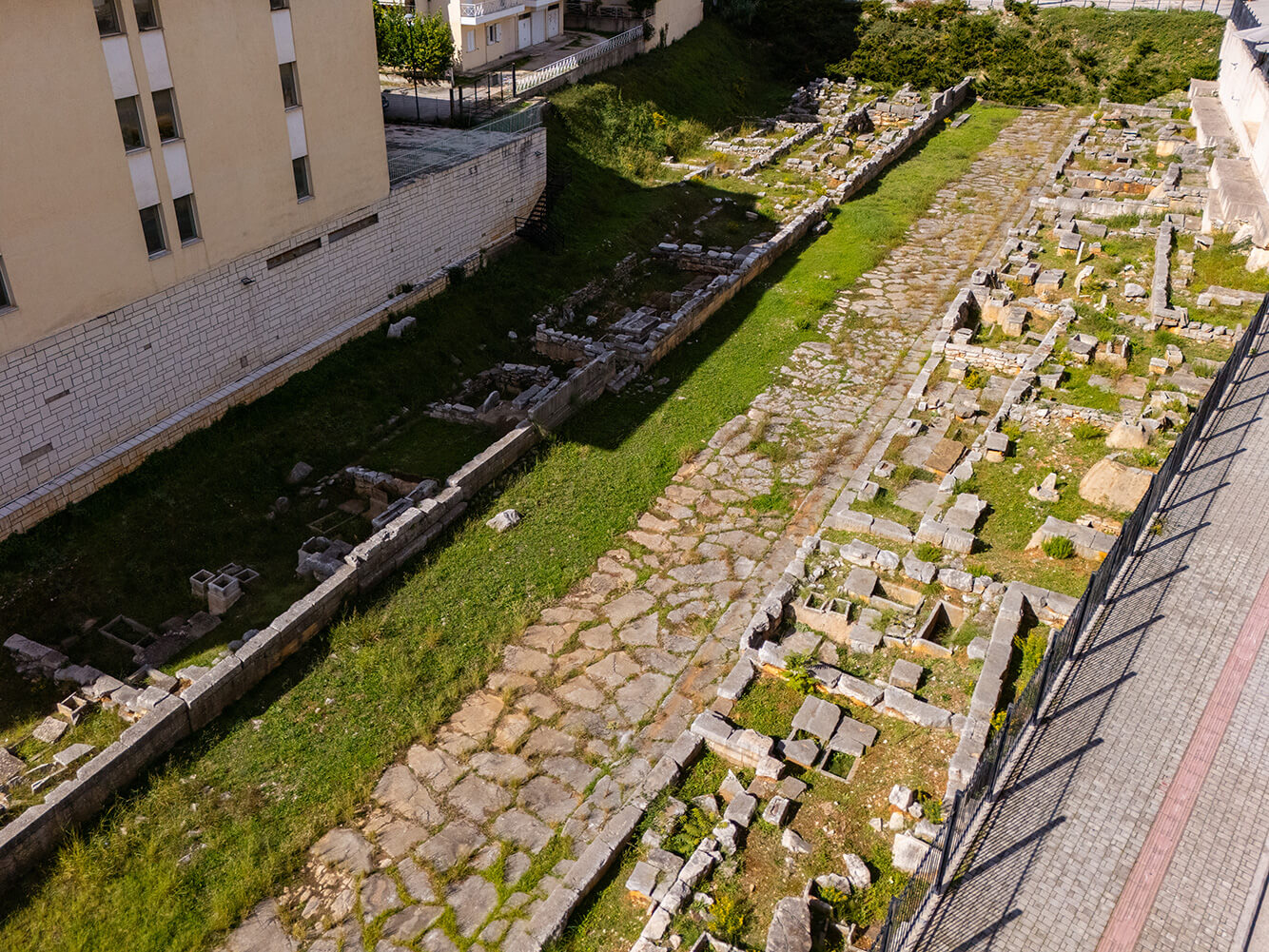
At the foothills of Peranthi hill, in the area of modern Arta, stretched the extensive cemeteries of ancient Ambracia; the most imposing of these is the western cemetery, along the ancient avenue often called the "Sacred Way."
Sections of the area have come to light, revealing monumental burial precincts and types of tombs spanning from the Archaic to the Roman eras.
The avenue—both a burial axis and a traffic artery—started from the south gate of the city walls and ended at the port of Ambracia.
The sight of the ancient remains within the modern urban landscape of Arta transports the visitor to a period where life and death were intertwined in the same place, and the city weaves its past into the present.

The Municipal Art Gallery of Arta "G. Moralis" in the city of Arta began its operation in December 2010, in the renovated building of the former Fire Department at 13 Nikolaou Plastira Street.
It has two main halls: the first houses the permanent collection which includes works by contemporary Greek artists such as Giannis Moralis, Giannis Mitaras, Dimitris Psychopedis, and others, while the second is intended for periodical exhibitions and educational programs.
With its name, tribute is paid to Giannis Moralis, an artist from Arta, strengthening the relationship between modern art and the local cultural footprint.
The art gallery operates as a vibrant cultural hub for the city, inviting locals and visitors to discover visual creation through exhibitions, activities, and art dialogues.
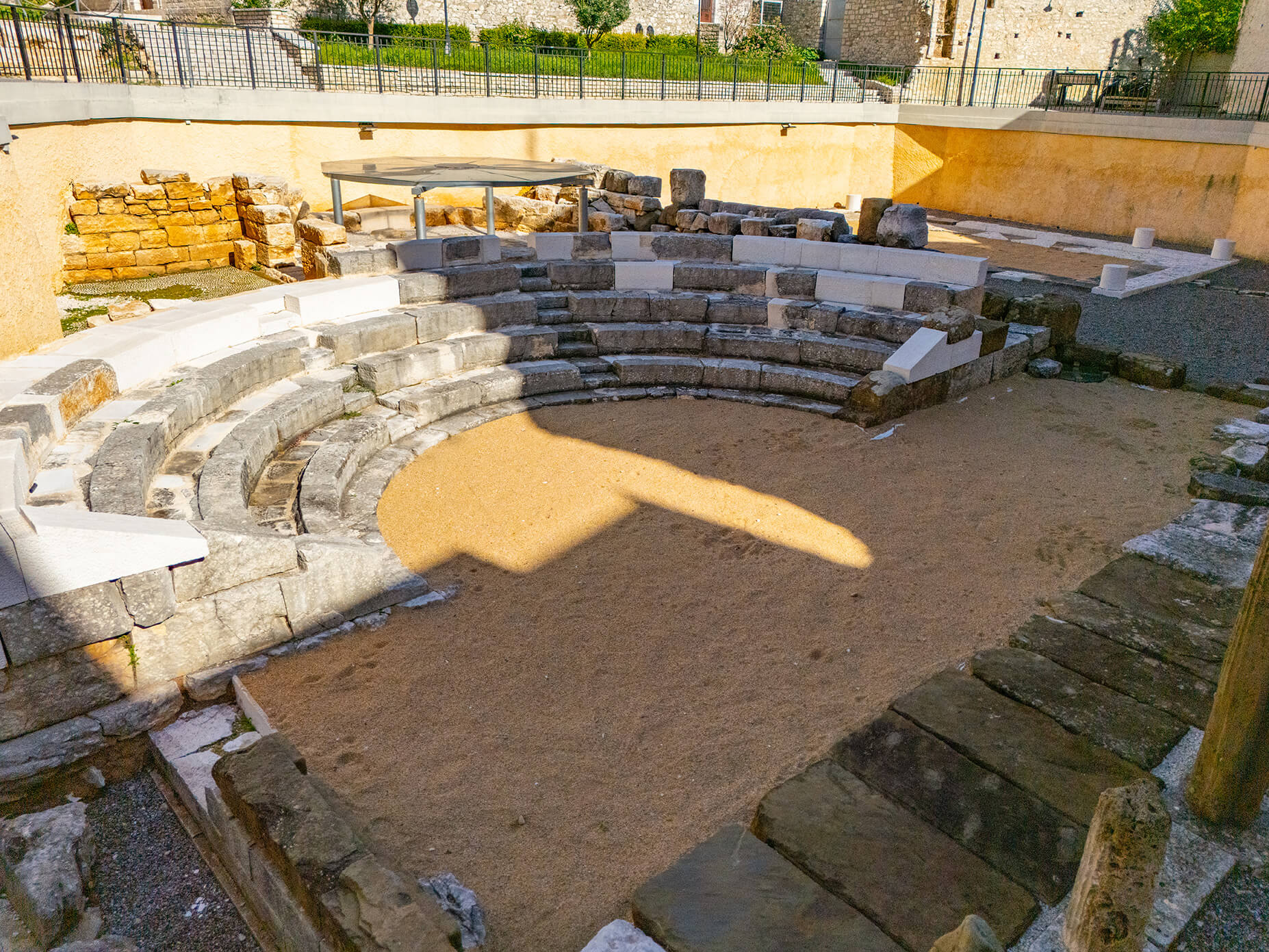
In the modern city of Arta, within the dense urban fabric and very close to the historic center, lies the Small Theatre of Ambracia—one of the most peculiar and rare archaeological monuments of the region. According to prevailing data, the theatre was built in the late 4th – early 3rd century B.C., during the period when the city was the seat of Pyrrhus.
However, it did not follow the usual practice of construction on a natural hill; instead, it was built on an embanked slope over the foundations of bath installations and houses of the classical city.
Its orchestra is an almost perfect circle with a diameter of $6.70$ m, and the *koilon* (auditorium) features limestone seats divided into wedges by radial stairways.
The theatre, characterized as the "smallest known ancient theatre" in the Greek world, remains a vibrant element of the city of Arta—a place where the past and the present intersect, recalling the significance of Ambracia in history as well as the city it became.

The Plane Tree of Ali Pasha, or Plane Tree of Arta, is a centuries-old plane tree located on the left bank of the Arachthos River, next to the famous bridge.
According to local tradition, Ali Pasha of Ioannina used to sit under its enormous branches and watch the hangings of his opponents or those who dared to violate his orders.
Its dense foliage spans over $200$ sq.m. and offers its shade to those enjoying their coffee with a view of the bridge. Its trunk is so large that it takes 8-10 adults to hug it.
In 1976 it was declared a preserved monument of nature. For its protection, railings have been added around its enormous trunk, as well as supports for its branches.
